
Overview
Address
314 W Hastings St, Vancouver BC
Neighbourhood
Downtown
type
Commercial
Protection & Recognition
- M: Municipal Protection
Description
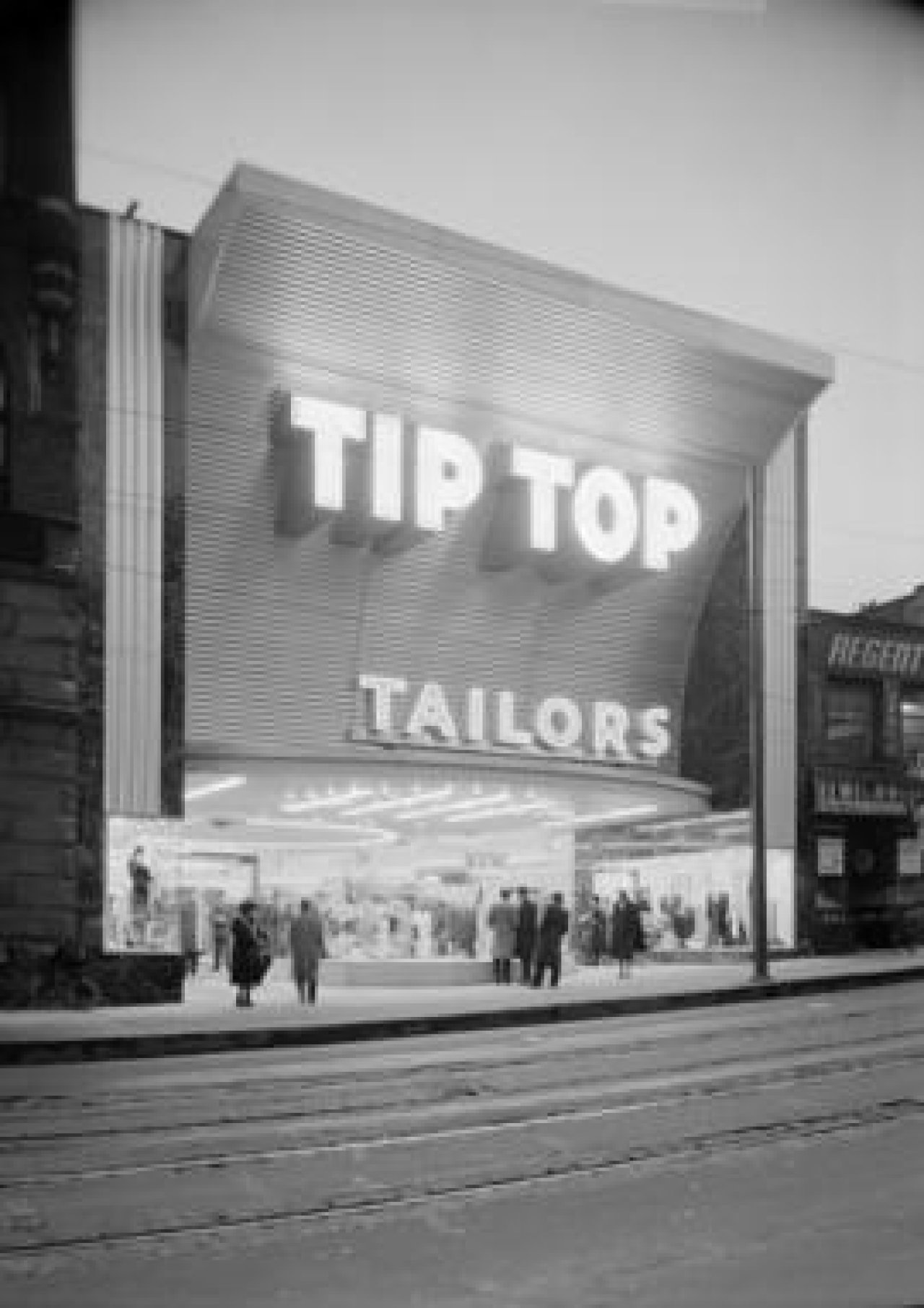
The Tip Top Tailors Building at 314 West Hastings Street was constructed during a period when post-war material and technological advances enabled architects to depart from historical design precedents and construction methods, favouring strikingly geometric and streamlined forms previously unattainable. Designed under the direction of Claude Logan, the building is synonymous with modernist experimentation following engineering breakthroughs and increased consumerism after the Second World War.
The Tip Top Tailors clothing firm opened its West Hastings branch in 1948, featuring three storeys: the ground floor for sales, the second for fitting rooms and offices, and the third for the tailor shop and stockrooms. This branch was the only one chosen from Tip Top Tailors’ 55 stores across Canada to enter the haberdashery business and expand the ladies' ready-to-wear department. The expansion was a result of the company’s faith in the “tremendous growth and expansion of the province,” as reported in the Vancouver Daily in 1951.
In the mid 1940s, architects began to modify the structural forms of Art Deco, favouring minimalist shapes that emphasized function over decoration. This shift introduced Streamline Moderne, an architectural style that borrowed visual motifs from aerodynamic designs, such as the distinctive profile of modern airplanes. Claude Logan’s application of this architectural movement is evident in the Tip Top Tailors Building through its sleek, simple, curving lines and vertical emphasis. The addition of long ribbon windows on the ground floor further exemplifies his influence from ‘new-age’ inventions like ocean liners and automobiles, which utilized similar designs to maximize efficiency and minimize drag.
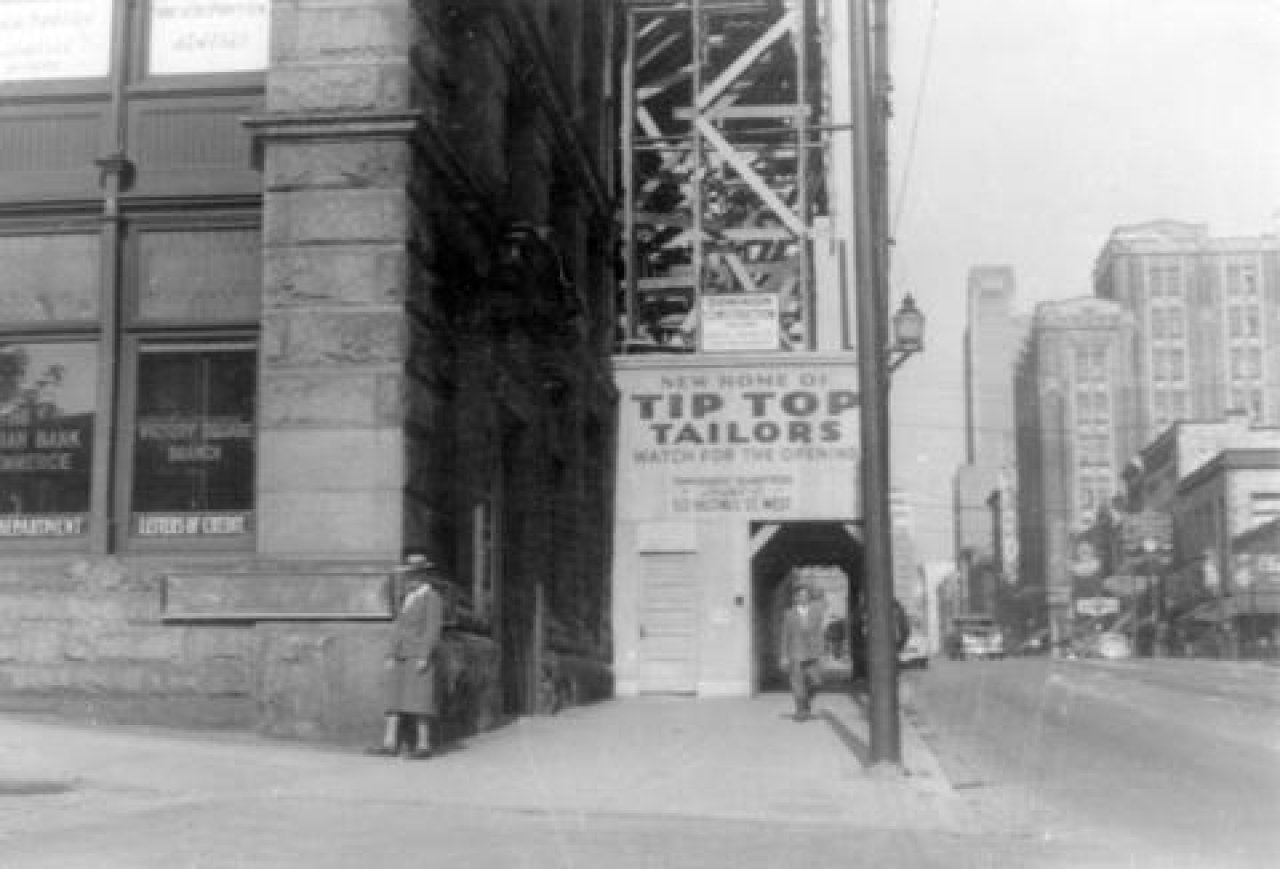
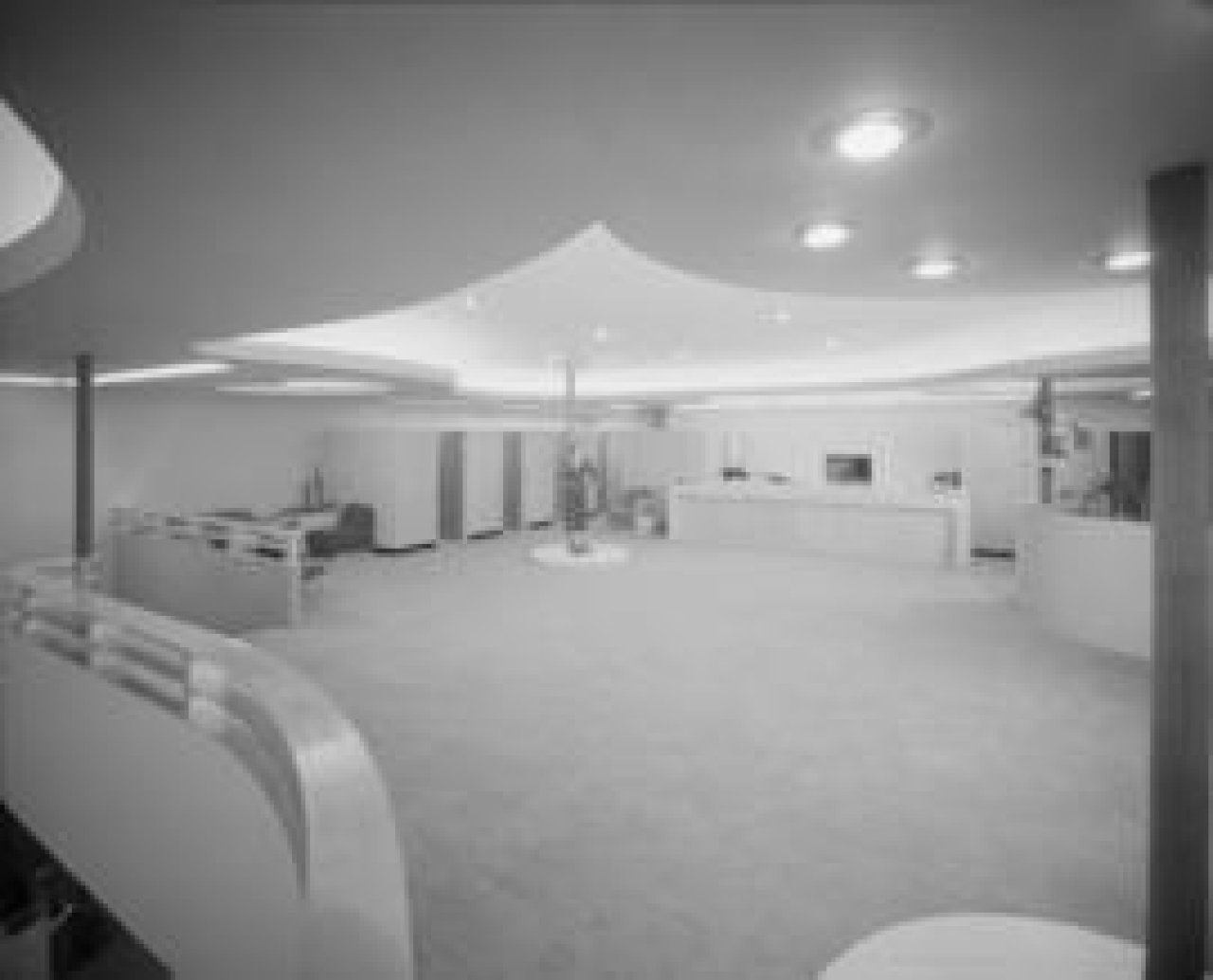
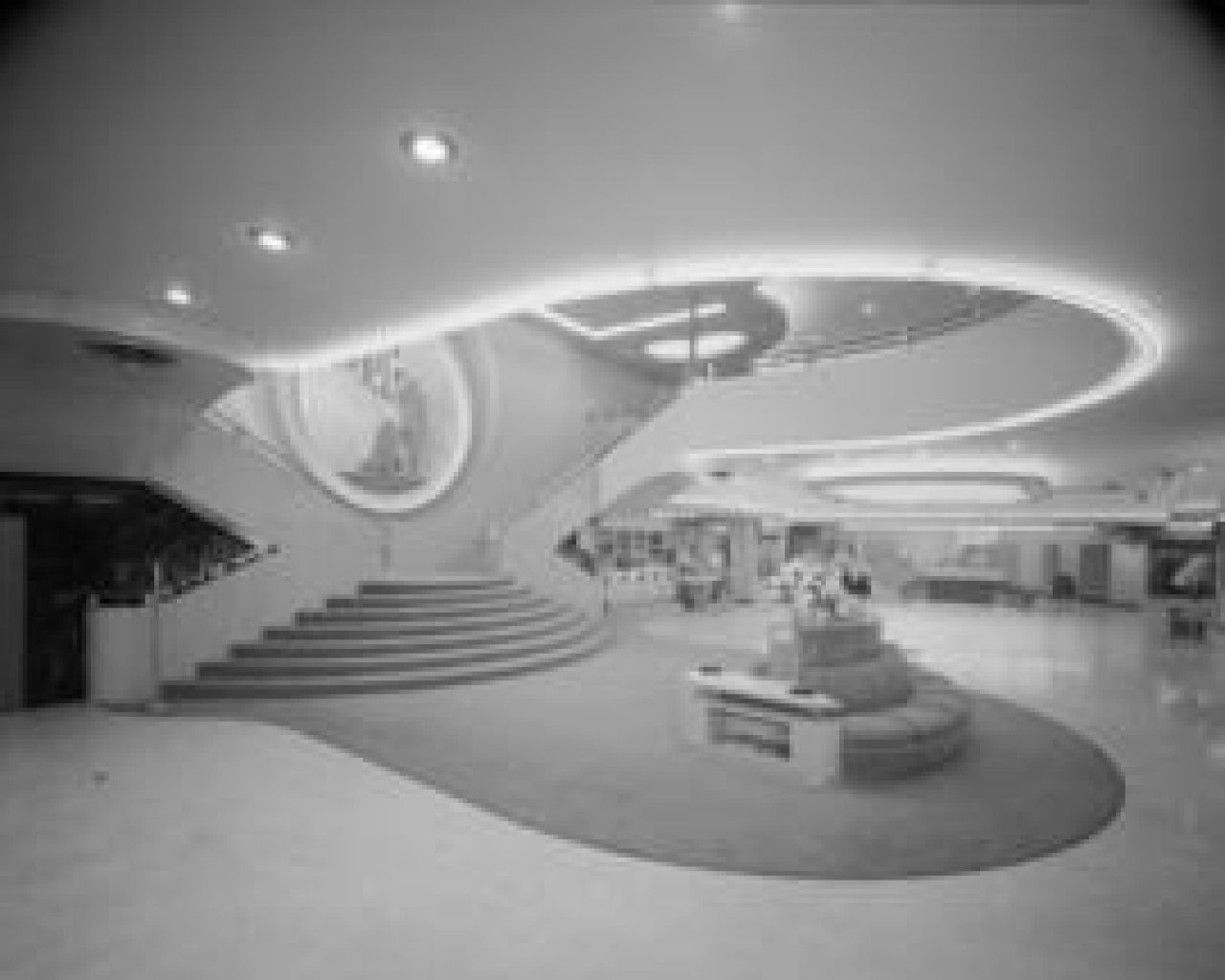
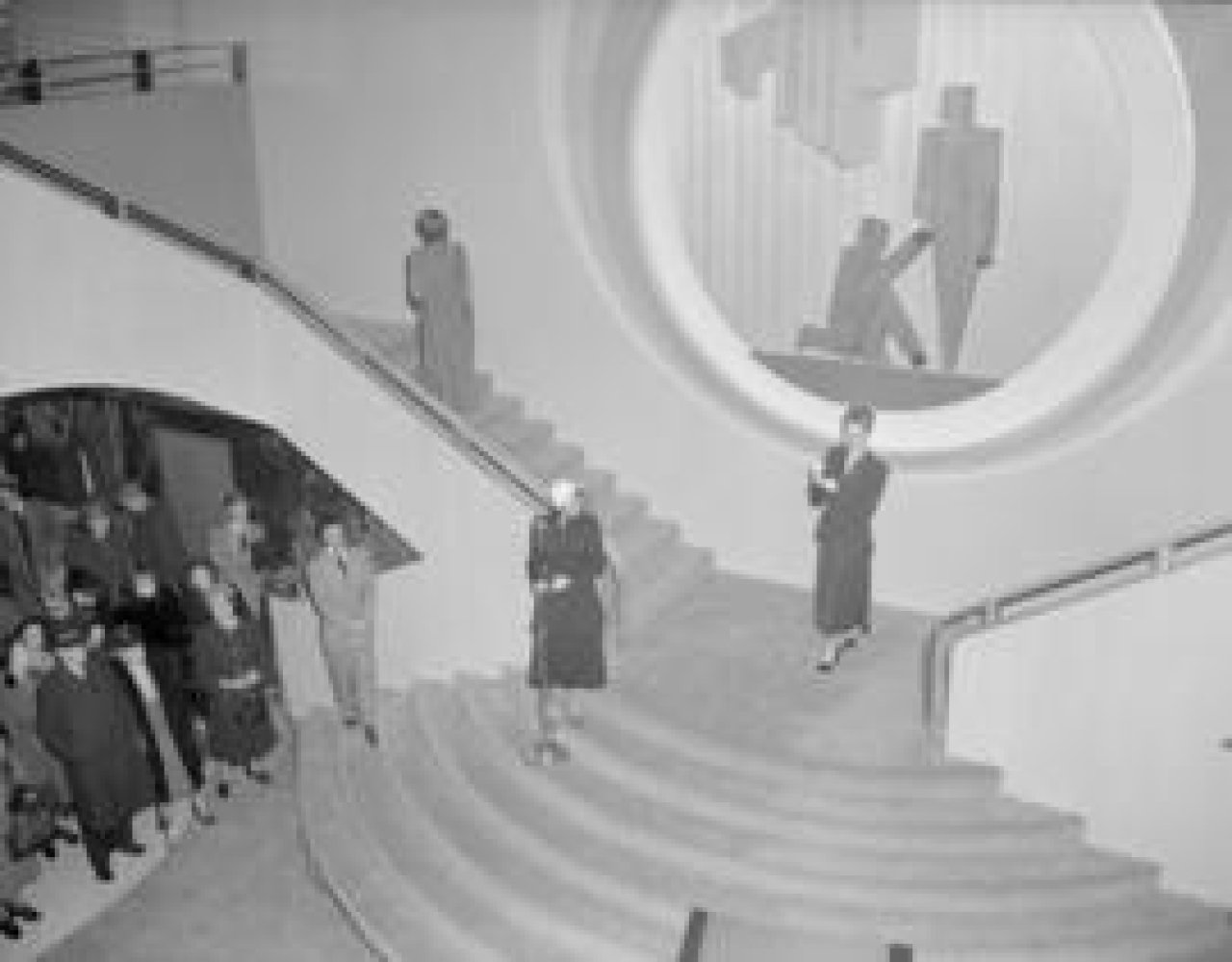
The construction of the Tip Top Tailors Building required inventive structural solutions in order to achieve its sleek and monolithic design. One of the primary goals was to create a spacious retail space capable of commanding attention from the street, which involved removing the interruption of interior support columns. The Vancouver Daily Province reported in 1948 on a unique construction technique where engineers installed steel trusses on the third floor, using suspended steel rods to support the second floor. This innovative approach effectively transferred the building's structural load upward, allowing the ground floor to remain unobstructed. A striking three-dimensional mural of a Tip Top logo was placed over the central stairway, its visual impact heightened by the meeting of the building's curved interior walls. The floorplan is organized around a central core and circulation system whose proportions are comparable to the streamlined hull of a vessel.
While the structural skeleton of the Tip Top Tailors building has remained relatively intact over the years, original details of the envelope and exterior underwent significant alteration following a change of ownership in the 1950s. Former fitting rooms and alteration stations were replaced with cubicles, and the sales area on the lower level was divided into two storefronts, each with a separate address. Decorative elements of the original facade were remodeled or concealed over the years. The recessed glass entrance was extended to the sidewalk, which resulted in the loss of the ‘verde antique’ marble that once decorated the bases of the fluted piers. The monolithic 5000-pound aluminum facade remains, but it has lost one of its most defining features: the original neon Tip Top Tailors sign as seen in historic photos.
By the late 1960s, the former retail space was divided up into renovated offices and housed an eclectic mix of businesses. In the 1990s, the building hosted several creative establishments and grassroots communities as the Or Gallery moved in, along with the Crosstown Traffic Cafe, where alternative punk shows were organized. The cafe was an important cultural moment and meeting place for Vancouver's underground scene, transforming its storefront into a stage for musicians on weekends. This creative hub lacked government intervention, which inspired creative independence but also made it notorious for criminal activity.
In 2018, the building was sold to a development company, which plans to transform it into a residential property.
Architect
Claude Logan (legally Claude White Logan Clutterbuck) was a chief designer at the Dominion Construction Company, one of Western Canada's largest construction companies in the 1940s. He was also an accomplished pianist and music conductor, playing regularly at popular venues like The Cave and Hotel Vancouver's Panorama Roof. In this capacity, for over 25 years, his sweeping facades and curved glass surfaces produced eye-arresting features that garnered attention in local newspapers. His artistic range, which spans many specialties, was profiled several times in the media and is most apparent in his architectural drawings which have been described as bordering on “musical transpositions and arrangements.” At Parnell Motors Garage in West Vancouver, Logan incorporated white pine driftwood in the interior design, the first time this wood was used commercially, according to The Vancouver Daily Province in 1952. Additionally, Logan assisted in the design of the warehouse and office complex at 3335 Grandview Avenue, praised in a 1954 Vancouver Sun article as “one of the most modern structures of its kind in Western Canada”. Within the same building, he was also credited with innovative interior details such as the use of artificial rubber plants, marking the first documented use of this novelty in Canada.
On January 3rd 1948, just three months before construction began on the Tip Top Tailors Building, The Vancouver Daily Province reported that a .22 bullet pierced the window of Dominion Construction Company's engineering office, narrowly missing Logan as he was bending over his drawing board.
Recent Developments
In 2022, the Vancouver Heritage Commission (VHC) reviewed Public Reach Properties’ rezoning application and proposed a conservation plan for 314 and 328 West
Hastings. The VHC supported the addition of the two buildings to the Vancouver Heritage Registry in the ‘B’ category, which means that, in the context of rezoning, a heritage property must be fully conserved. Given that this application provides secured market rental housing, a priority use for the Downtown East Side, staff supported a facade-only retention. The long-term maintenance of the facades is to be achieved by a Heritage Restoration Covenant, which is to be completed and registered on title to the lands.
Neighbourhood
West Hastings is situated within the ancestral territories of the Coast Salish peoples who lived there for thousands of years. The Musqueam, Squamish, and Tsleil-Waututh Nations held overlapping stewardship of the area by establishing a network of seasonal villages and trade routes linking coastal and interior communities. Near what is now Abbott Street once stood an indigenous landmark called Lekleki, meaning “grove of beautiful trees,” which was used as a gathering place.
A commemorative plaque at the corner of 300 West Hastings Street, formerly where the Canadian Bank of Commerce stood, identifies the site where Vancouver was officially surveyed. In 1885, Canadian Pacific Railway land Commissioner Lauchlin Hamilton drove the first wooden stake at this site, beginning the survey of District Lot 541 - the land to the south and west that comprises the city’s modern downtown. Cambie and Hastings Street is the boundary where the CPR survey of 1885 intersected with the earlier Old Granville Townsite, surveyed in 1870, for the settlement commonly known as Gastown. The commemorative plaque was originally installed on the exterior of the bank building by city archivist J. S. Matthews and has since been relocated to the public lobby of the replacement building.
Research Credit: Katya B. (May 2026)
Source
City of Vancouver, Vancouver Daily Provence, Changing Vancouver, Goverment of Manitoba, Calgary Herald, The Vancouver Sun, Vancouver is Awesome
Gallery
Map
Contact
Please Share Your Stories!
Send us your stories, comments or corrections about this site.